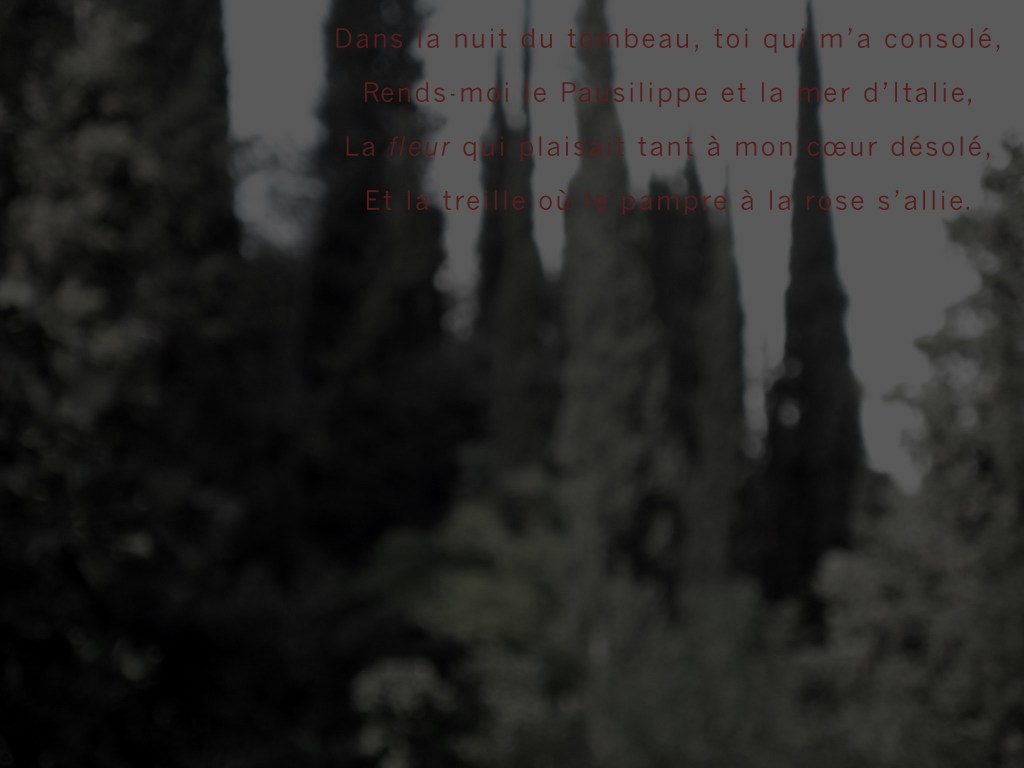
Ancolie – In the Delirium of Reception (2007, 2026)
Ancolie – In the Delirium of Reception investigates the intersections of sound, text, memory, and installation through a performance developed for the South London Gallery in 2006, staged within Chris Burden’s sculptural environment 14 Magnolia Double Lamps. The project uses this architectural setting as a catalyst for reimagining the gallery as a nocturnal, phantasmic site in which the voices of literary predecessors—most notably Gérard de Nerval and Antonin Artaud—can be re‑sounded, re‑embodied, and metaphorically “disinterred.” Drawing on concepts from Artaud, Kristeva, Benjamin, Blanchot, and Weiss, the essay explores how recorded and performed sound can operate as a psycho‑acoustic form of prosopopoeia: a means of transmitting the imagined, lost, or impossible voice of the dead.
The text traces the evolution of the performance Ancolie from earlier work, including Lost Narratives, in which decaying photographic slides and field recordings served as “found” sites of fragmentation and melancholic resonance. Through these materials, the essay examines parallels between photography’s spectral ontology and recorded sound’s capacity to conjure absent presence. It argues that sound—particularly noise, transmission, repetition, and the manipulated voice—functions as a mode of psychic excavation, opening a space where madness, melancholia, and visionary experience can be aesthetically navigated.
The performance itself is analysed as a layered assemblage of cicada recordings, manipulated environmental noise, Italian-language recitations of Nerval, and dislocated moving images, creating an unstable environment between dream, rite, and delirium. The work positions itself within a lineage of experimental radio, phantasmic transmission, and the alchemical interplay between composition and decomposition central to The Institution of Rot.
The concluding section proposes Ancolie as a germinal model for an “experimental audio library”: an evolving, mobile archive of texts, voices, and sound works that privileges suggestion over representation, and listening as an act of deep psychic and spatial engagement. This audio library extends the long-term trajectory of The Institution of Rot, shifting its focus from physical performance spaces to fluid, recorded spaces where the real and imaginary meet—and where the dead continue to speak.
Core Concepts
- Disinterment in sound
- Phantasmic voices
- Prosopopoeia
- Transmission
- Melancholia / Black Sun
- Madness / schizophrenia / altered states
- Spectrality
- The imaginary
- The voice of the dead
- Sound as excavation
- Psycho-acoustic journey
- Noise / mental noise
- Sonic field
- Disembodiment
- Reproduction and corruption
- Composition / decomposition
People and Intertextual References
- Gérard de Nerval
- Antonin Artaud
- Julia Kristeva
- Walter Benjamin
- Maurice Blanchot
- Roland Barthes
- Brandon LaBelle
- Allen S. Weiss
- Diamanda Galás
- C.G. Jung
- Mike Nelson
- Carmelo Bene
Texts, Works, and Key Terms from Literature
- Les Chimères
- El Desdichado
- Artemis
- Aurélia
- Ancholia / Ancolie
- The Disinherited poet
- The Black Sun of Melancholia
- The cavern (Nerval/Artaud motif)
Artistic and Sound Practices
- Sound performance
- Field recordings
- Radio / shortwave interference
- Feedback / white noise
- Installation
- Audio library
- Experimental audio library
- Imaginary Hospital Radio
- Remote performance
- Site-specific sound
- Tone poems
- Live remix
- Found sound
- Archival sound
Spaces + Sites
- South London Gallery
- 14 Magnolia Double Lamps (Chris Burden)
- Institution of Rot, London
- Lost Narratives
- Abney Park Cemetery, Stoke Newington, London
- Lake Garda / Salo (Italy)
- Rovereto / River Leno (Italy)
- Ossuary
- Naples / Posillipo (Italy)
Themes and Motifs
- Decay / dissolution
- Memory and loss
- Altered perception
- Dream / second life
- Ritual / nocturnal space
- Melancholic landscape
- The archive
- Haunted weather
- Death and transmission
- The spectral photograph
- Oblivion / forgetfulness
- Identity and erasure
- The imaginary city
Media and Technological Keywords
- DAT recordings
- 35mm slides / decay
- Video projection
- Shortwave radio
- Manipulated noise
- Field microphone
- Remote camera
- Audio book / podcast
- Noise-free headphones
Historical / Mythic References
- Acheron
- Orpheus
- Sirens
- Black sun
- Saturnine
- Chimeras
- Melencolia (Dürer)
- Tarahumara Indians
- All Souls’ Day
How This Essay Contributes to the Literature on Sound
This essay contributes to sound studies and sound art literature in five major ways, each of which extends or reframes existing discourse. Together, they situate Crow’s practice within a lineage of experimental sound, philosophy, and performance while introducing new conceptual and methodological frameworks.
1. It introduces “disinterment in sound” as a new theoretical device
You develop disinterment as a metaphor for sound practice—an idea that extends the work of Weiss (Phantasmic Radio) and LaBelle (background noise, transmission, the phantom). Where these writers examine the voice as disembodied or spectral, your text deepens the concept by exploring how sound can:
- reanimate lost voices,
- conjure imaginary presences,
- and activate archival or literary ghosts through performance.
The essay positions sound not only as transmission but as a metaphysical excavation, a process of releasing or re‑voicing the dead via the living. This is both original and generative for future inquiry into sound, memory, and absence.
2. It contributes to discourse on voice, spectrality, and the poetics of the recorded
The work draws parallels between:
- the “spectrum” of the photograph (Barthes),
- and the “phantasmic” qualities of recorded sound (Weiss, Concannon).
By analysing the “impossible voice” of Nerval alongside the fragmentary image, the essay adds to the growing field that links:
- sound with haunting,
- listening with mourning,
- and recorded media with spectral presence.
It places Crow’s practice within this lineage while expanding it by showing how the voice becomes a performative prosopopoeia—a technique rarely articulated so explicitly in sound literature.
 INSTITUTION OF ROT